

Whoa! I opened a crypto site last week and nearly froze. Seriously? My browser extension asked for full account access to everything — on a site I barely trusted. My instinct said run, but curiosity kept me there, poking at the UI and the permission prompts.
Okay, so check this out—Rabby isn’t perfect. But for someone who juggles multiple chains and keeps wallets for different projects, it fixes a lot of everyday annoyances. At first I thought browser wallets were all the same, just skins over the same weak UX. Actually, wait—let me rephrase that: I assumed the differences were minor, but Rabby showed me otherwise, in ways I didn’t expect.
Here’s what bugs me about old-school extensions: too many popup prompts, ugly transaction details, and ambiguous contract approvals. That part bugs me. It feels sloppy. And honestly, that sloppy surface makes you sloppy too — you approve fast and regret it later. On one hand ease is great, though actually the security tradeoffs matter more than a slick animation.
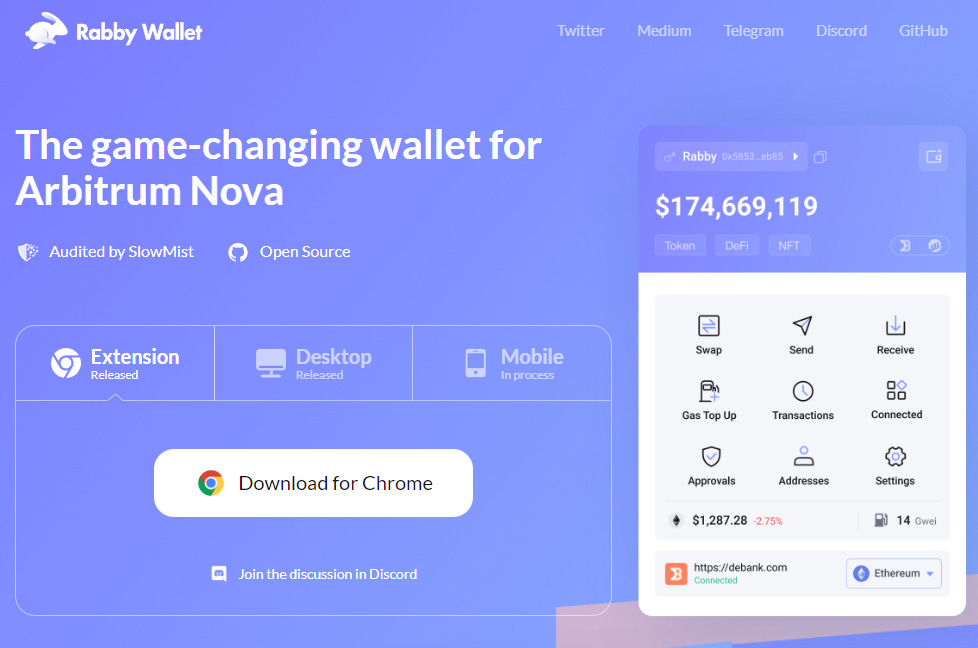
Rabby’s core idea is simple: give users clearer context before they sign. The extension groups approvals, highlights approvals that grant token transfer rights, and surfaces gas info in a way that is actually readable. Hmm… the designers clearly spent time with real users, not just designers who love minimalism for its own sake. My first impressions were intuitive and reassuring, which matters a lot when money is on the line.
Let me walk through a typical morning routine. I open my browser, the wallet is unlocked, and I see a subtle badge showing pending approvals. Short, clear, and actionable. The transaction flow lays out spend limits, expiration windows, and the contract address that will actually receive permission. That small detail has stopped me from approving weird approvals more than once. Small wins, very very important.
Why a dedicated extension still beats mobile wallets for DeFi
Desktop extensions give a different mental model. You’re in a browser tab with multiple tabs open, spreadsheets, research, and a few trading dashboards. The context is broader. You can copy addresses, compare contracts, and use dev tools if you want to — that’s powerful. But with great power comes great confusion: multiple dapps, multiple networks, multiple assets, a mess.
Rabby tackles that by separating accounts and notifications, offering a clearer transaction history, and bundling approvals. You can set custom gas presets and see exact calldata summaries. Initially I thought the calldata view wouldn’t help me much, then I realized it explains the intent of interactions, especially with DeFi aggregators. On one occasion it saved me from a swapped parameter that would have cost a lot.
I’m biased toward usability. I’m also pragmatic about security. Rabby adds features like an approval guardian and “revoke” links which let you undo token approvals from within the extension — nice. That said, revoking is sometimes confusing for new users; the UI could use a slightly clearer flow there. But overall it’s a leap forward compared to earlier wallet extensions I’ve used while living in San Francisco and traveling to conferences across the US; I’ve seen how people fumble approvals in noisy, crowded spaces.
One part I love is how Rabby handles multi-chain setups. You can add networks without hunting through JSON RPCs, and it surfaces which chain a dapp is asking to switch to. That saves accidental chain switches — and the embarrassment of sending a mainnet token on a testnet transaction. I’m not 100% sure they nail every exotic chain, though; for very new L2s you might need to add custom details sometimes.
Security architecture matters. Rabby keeps keys in an encrypted extension store, and supports hardware wallets for critical actions. That’s huge for me. Hardware key support means my cold storage habits can meet the convenience of browser interactions. On the flip side, browser extensions are by nature attack surfaces — nothing is invulnerable. So treat the extension like a smart tool, not an island of trust.
Something felt off about grant-all approvals in some dapps. My gut told me to look closer. I dove into the approval lists and found tokens approved for unlimited spending, a pattern that’s creeping through DeFi. Rabby makes those approvals visible in a way that forces a decision: approve or set a limit. That nudge is an underrated security practice.
I’ll be honest — I’ve had a love‑hate relationship with wallet notifiers. Push notifications can be spammy. But Rabby’s in-extension prompts feel less pushy and more informative. They remind you to check gas, confirm counterparty addresses, and consider slippage. Oh, and by the way… the gas presets are actually useful instead of purely ideological.
How I integrated Rabby into a working DeFi workflow
First I separated accounts: trading, staking, experimental. Empty wallet for new contracts. Simple practice but it transforms risk management. Then I used Rabby’s account labels and icons to avoid sending tokens from the wrong account. That small habit saved me from a costly mistake when switching networks mid-swap.
For developers or power users there’s a network inspector and a readable calldata view. Initially I thought I wouldn’t use those features much, but they’ve been handy for reviewing transaction intent and debugging approval flows. On rare occasions I’ve opened the inspector to copy an address directly into a block explorer — saves time, reduces errors.
Something else — Rabby seems to favor progressive disclosure. It shows essential details up front, with advanced info accessible if you want it. That design choice reduces cognitive load and prevents reckless clicking. There’s a tension here between simplicity and transparency, though, and sometimes advanced users will want even deeper logs or raw calldata by default.
Now, if you want to try it, here’s a straightforward place to start with the official download link: rabby wallet download. It’s the one I used for my first setup. The installer prompted for basic permissions and the onboarding walked me through recovery phrase best practices. Seriously, that onboarding matters; lots of users skip these steps and pay later.
Common questions from folks who switch to Rabby
Is Rabby safe for large balances?
Short answer: only if you use hardware-backed keys or keep high-value assets in cold storage. Rabby supports hardware wallets and offers tools to limit approvals, but browser extensions can’t replace multi-sig or cold storage for long-term holdings.
Will Rabby work with every DeFi app?
Most mainstream dapps work fine. There are occasional edge cases with newer L2s or niche protocols, and you might need to add custom RPCs. The community and docs are fairly responsive, though, and compatibility improves quickly.
Can I manage approvals and revoke them later?
Yes. Rabby offers a revocation UI to see active token approvals and remove them. It simplifies the process, but remember some protocols may require you to re-approve manually when you interact again.
To wrap up, kinda ironically, using a better tool changes behavior. You slow down, read prompts, and stop auto-approving nonsense. That shift is the real win. I’m not saying Rabby is flawless; nothing is. But it’s a practical step toward safer, more informed DeFi interactions. If you care about clarity and control in your browser wallet, give it a try — and maybe set up separate accounts for experiments.